
Most “easy songs” lists cheat: they sneak in a third chord on the bridge or hide a barre in the chorus. Every song below uses exactly two chords, start to finish, as arranged in our catalog. Two shapes, one change to practice, and you’re playing real music — not an exercise.
Every pick links to its full chord sheet. Chords and structure only — no lyrics.
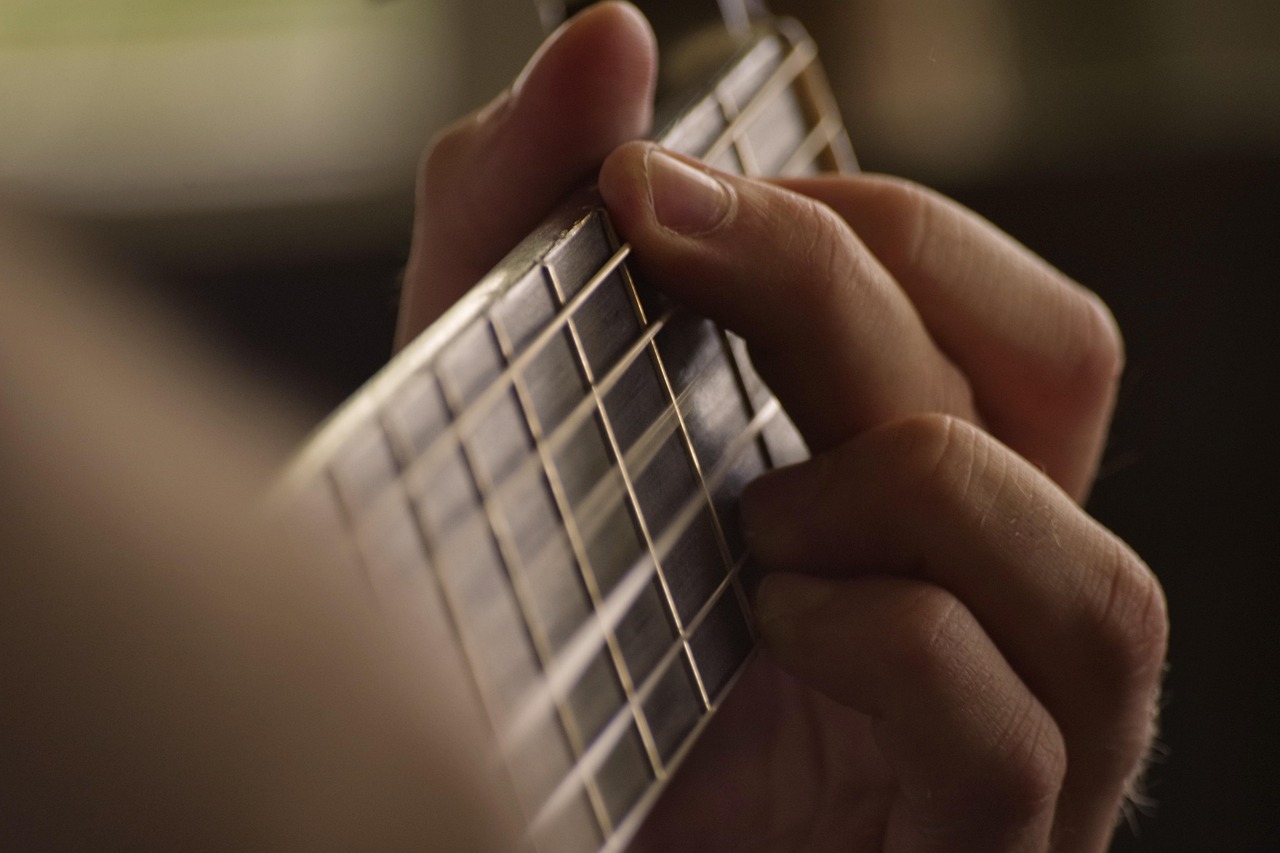
What counts as a true 2-chord song
Before a song makes this list, we check the full arrangement:
- Exactly two chords, everywhere. Verse, chorus, bridge — if a third chord appears anywhere, it goes to our 3-chord list instead.
- The change is the song. With only one chord change to master, your practice loop is brutally simple: back and forth until it’s smooth.
- It has to be a real song. No campfire filler — these are songs people actually request.
Two-chord rock and pop
1. Horse with No Name — America
Chords: Em, D. The most famous two-chord song ever written. The second shape is slightly unusual, but the trance-like strum is the real skill — keep it perfectly even. Full chords →
2. Free Fallin’ — Tom Petty
Chords: D, G. Two of the friendliest open shapes on the instrument, in a loop everyone in the room will recognize by bar two. Full chords →
3. Jane Says — Jane’s Addiction
Chords: G, A. A two-chord vamp that grooves for the entire song. Great for learning to make a simple change sound alive instead of mechanical. Full chords →
4. Eleanor Rigby — The Beatles
Chords: Em, C. Our arrangement condenses the string section down to two open chords. Dark, dramatic, and very hard to get bored of. Full chords →
5. Paperback Writer — The Beatles
Chords: G, C. The other Beatles two-chord entry, this one built on the single most useful chord change in guitar. Full chords →
6. Something in the Way — Nirvana
Chords: Em, C. Slow, quiet and atmospheric — the same two shapes as Eleanor Rigby at half the intensity. A good first “dynamics” lesson: play it soft. Full chords →
7. Break on Through — The Doors
Chords: Em, D. Same pair as Horse with No Name, completely different energy. Fast changes at a driving tempo — this is the speed drill of the list. Full chords →
8. Down by the River — Neil Young
Chords: Em, A. A long, hypnotic two-chord jam. Perfect for practicing with a friend: one strums, one improvises. Full chords →
9. What I Got — Sublime
Chords: D, G. The same two chords as Free Fallin’ with a laid-back skank feel. Learn both and hear how rhythm alone changes everything. Full chords →
10. Whole Lotta Love — Led Zeppelin
Chords: E5, D5. Two power chords and one of the biggest riffs in rock. Your introduction to the two-finger shapes that drive power-chord songs. Full chords →
11. Born in the U.S.A. — Bruce Springsteen
Chords: B, E. The anthem is two chords — the catch is that B major is usually played as a barre. Save it for when you’re ready for that step, or treat it as your reason to learn one. Full chords →
Two-chord country, folk and singalongs
12. Achy Breaky Heart — Billy Ray Cyrus
Chords: A, E. Two open chords and a dance-floor tempo. The change lands on the beat every time, which makes it a great timing trainer. Full chords →
13. Jambalaya — Hank Williams
Chords: C, G7. A honky-tonk classic that introduces the G7 shape — one finger different from G, whole different flavor. Full chords →
14. Iko Iko — The Dixie Cups
Chords: C, G. Pure rhythm song. Two chords carry it entirely, so put your attention on the strumming hand. Full chords →
15. Cotton-Eyed Joe — Traditional
Chords: Am, G. A fiddle tune that works beautifully as a fast two-chord strummer. Start slow; the tempo ceiling is high. Full chords →
16. He’s Got the Whole World — Traditional
Chords: G, D. The gentlest song on the list and a favorite first song for kids — it also anchors our kids’ songs guide. Full chords →
Two-chord blues and soul
17. Boom Boom — John Lee Hooker
Chords: E, A. Two chords, maximum attitude. The stabs and stops matter more than the shapes — listen first, then copy the feel. Full chords →
18. Fever — Peggy Lee
Chords: Am, E. Minor, moody and mostly space. A masterclass in how much silence a great song can hold — and the easiest jazz standard you’ll ever play. Full chords →
The one-change practice loop
Two-chord songs are the fastest way to fix the hardest beginner problem: slow chord changes. Here’s the drill we recommend:
- Pick one song and isolate its change. Just the two shapes, back and forth, no strumming. One minute.
- Count your changes per minute. Clean changes only. When you hit 30, add the strum. When you hit 60, you’re ready for tempo.
- Play the actual song, start to finish. A wrong chord isn’t a restart — keep the rhythm going. Finishing badly beats restarting perfectly.
Once the change feels automatic, add a third shape and unlock our 3-chord songs list — the jump from two chords to three roughly quadruples your repertoire.
Frequently Asked Questions
What songs can you play with just 2 chords?
Real songs, not just exercises: Horse with No Name (Em, D), Free Fallin’ (D, G), Eleanor Rigby (Em, C), Achy Breaky Heart (A, E) and Boom Boom (E, A) all use exactly two chords in the full arrangement.
What are the easiest 2 chords to learn first?
Em and D, or G and D. Both pairs use open shapes with no barres, and each pair unlocks at least one full song on this list on day one.
Can two-chord songs actually sound good?
Yes — the songs above include entries by The Beatles, Led Zeppelin, Nirvana and Neil Young. With only two chords, the rhythm and dynamics do the talking, which is exactly what a beginner should be practicing.
How long does it take to learn a 2-chord song?
If you can hold both shapes, most people get a recognizable version in a single practice session. The one change between two chords is the only technical hurdle, so progress is unusually fast.
Every song on this list is tagged in the ChordSongs catalog with exactly two chords in the full arrangement — nothing hidden in a bridge. Chords shown are common beginner voicings; open any “Full chords” link for diagrams and structure.
Keep playing
Find your next song to learn
Browse thousands of free chord charts by instrument, difficulty, and chord count.