
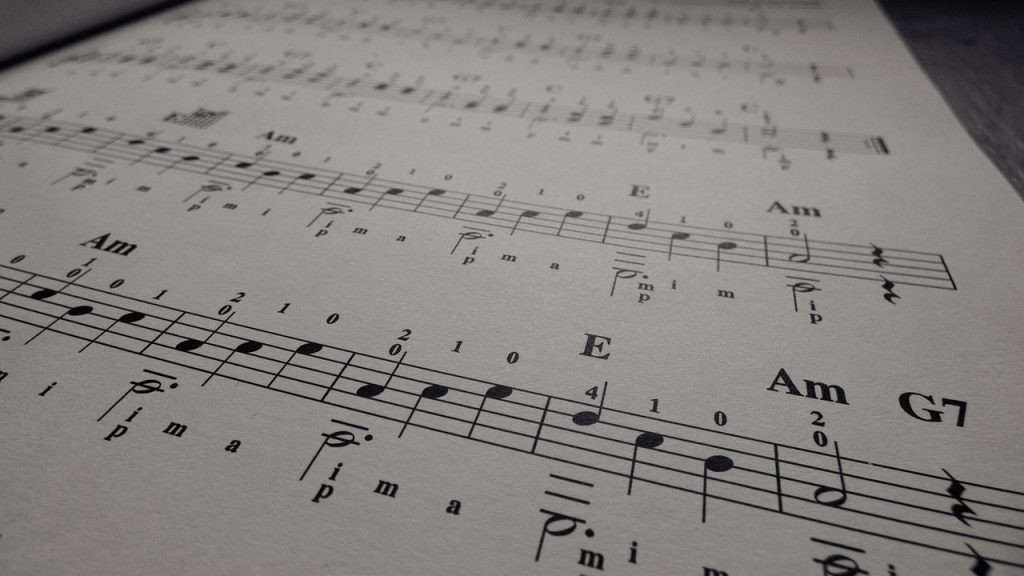
On ChordSongs, finding a song that fits your current mood is often easier when you start from harmony rather than titles. Large song-analysis databases now make it possible to see which chord movements return again and again in music people already know. This guide explains how to turn those recurring progressions into a calm, sad, uplifting, or tense search, whether you play guitar, ukulele, or piano. It also shows how a small layer of zodiac-based reflection can help you choose among songs with the same harmonic color.
Why chord progressions shape mood
Hooktheory reports more than 80,000 songs analyzed for chord and melody patterns, which it describes as the internet’s largest database of song analysis. That scale is useful because it shows which harmonic moves appear repeatedly across genres. The Top Songs chart includes Bohemian Rhapsody, Happy, Get Lucky, Someone Like You, Numb, Under the Bridge, Wake Me Up, and Mr Brightside. These songs feel emotionally distinct, yet each is built from chord movements that can be identified and reused. You do not need a published valence or arousal score to hear the difference between a bright major-key movement in Happy and a minor-key movement in Someone Like You; the chord sequence itself carries much of that character. The same is true for tension and calm: distance, direction, and chord quality are doing the work.
Starting from a song you already trust
Choose a song whose emotional effect you know from experience. If you want calm, think of the track that has slowed your breathing and look at how its chords move. If you want tension, take a song that keeps you alert and study the distance between its chords. If you want sadness, pick a song that has reliably brought your mood down and note where the bass line falls. Hooktheory’s Top Songs list is a practical starting point because those widely analyzed tracks have their progressions documented. Once you can see the progression, use that sequence as your search rather than the song title. This helps you find other songs that share a harmonic skeleton, which is often a large part of why the original song felt the way it did.
Searching by progression, instrument, and difficulty
When you search by progression, narrow the results by the instrument you play and the level you can manage. For a calmer feel, start with progressions that move stepwise or by fourths between major and minor triads, and keep the difficulty low. For a sadder mood, try movements between minor chords with a descending bass line. For tension, include diminished or augmented chords, or progressions that shift quickly between distant keys. For an uplifting feel, look for progressions that rise toward a major chord at the end of a phrase. These are familiar harmonic habits rather than mood scores, but they give you a reproducible way to search. The instrument also matters: the same progression played on a ukulele with open chords sounds softer than it does on piano with dense voicings, so try the same search across guitar, ukulele, and piano before choosing.
Working without mood labels
Mood labels are only a starting point, not a substitute for listening. Two songs can share a progression and still feel different because of rhythm, tempo, melody, and production. The value of searching by progression is that it gives you a shortlist of harmonic relatives; the final choice should come from what you hear. If a calm progression turns up a song that feels too bright, slow the tempo in your own playing or move the same progression to a lower key. If a tense progression feels too heavy, drop the diminished chord or play the voicings more softly. The search narrows the field, but your ear makes the final call.
Zodiac references as an extra layer
Some players also look for song titles or lyrics that mention zodiac signs, then combine that reference with a chord search. If a sign already feels meaningful, that layer can help you narrow a large set of results without changing the harmonic mood. For Swedish-language readers who want the dates, symbols, and traits behind each sign, Stjärntecken.co offers guides to all twelve zodiac signs.
A practical conclusion
Start from a song whose emotional effect you trust, identify its chord movement, and search for that progression with your instrument and difficulty filters. Adjust the harmonic character from calm to tense by changing the progression, or from sad to uplifting by shifting from minor to major movements. Add a zodiac reference when you want an extra layer of meaning. The result is a set of songs that share a harmonic fingerprint and, in many cases, a similar emotional color. Let your ear decide among them, and keep the progressions that work so you can search them again.
Keep playing
Find your next song to learn
Browse thousands of free chord charts by instrument, difficulty, and chord count.